
Today, for the first time, we visited Natchez, Mississippi. Situated high along on a bluff overlooking the Mississippi River, Natchez is known for its beautifully preserved antebellum mansions and its significance in the cotton industry. It's also where the Natchez Trace Parkway begins, a peaceful roadway that we often take to avoid the chaotic interstates in Mississippi and Tennessee.
Most importantly, Natchez was once home to Forks of the Road, America’s second largest slave market, a place where enslaved people were trafficked, jailed, and torn apart from their families before being sold across the Deep South. This would be our first stop.
The space is quite small; so small that you could overlook it if you aren't paying attention. We walked slowly and quietly. We imagined tens of thousands of African American men, women, and children, in chains, brought down from the Upper South, often separated from their families, to this exact place, only to be sold right here where we were standing.
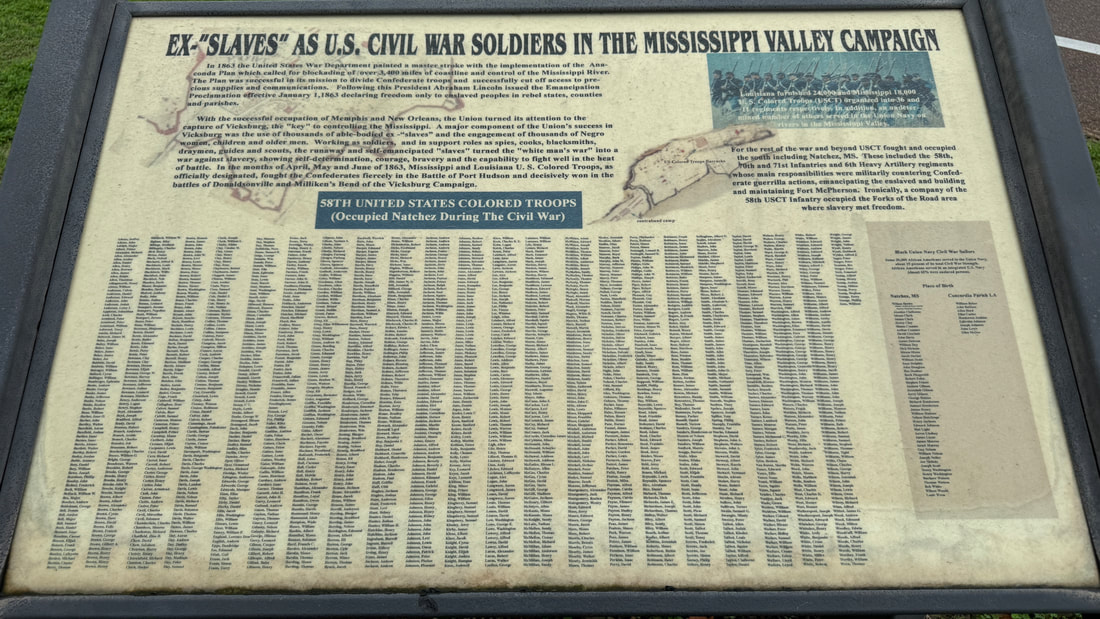
There are several informative displays that provide thoughtful and poignant information about antebellum slavery across the country, and how the Forks of the Road slave market impacted not just the enslaved, but the town and its residents. There is also a list of former enslaved people who served in the Civil War as U.S. soldiers during the Mississippi Valley Campaign.
There is also a beautiful piece of art, and it's easy to miss. In a small bed of concrete, there are broken chains from the formerly enslaved. It's small in size, but mighty in its meaning.
If you continue walking west down St. Catherine Street, there are additional markers that also relate to this site.
We skipped the antebellum mansions this time around. Instead, we decided to visit the William Johnson House, to learn more about the lives of free African Americans in Natchez. More on that in the next post.



.svg)


© 2011–2026 The Civil War Project. All Rights Reserved. Content may not be reproduced or scraped without permission.