
Latest posts
Review: Gettysburg (1993)
I will acknowledge that this review is a very long one, but it holds a special place in my heart. When the film Gettysburg came out in 1993, based on the Michael Shaara book The Killer Angels, I was working at a movie theater in Peoria, Illinois. I would say more, but my review says it all. I need to connect this to my Review page, but for now, here is the link.

A Place That Deserves to Be Seen: The Forks of the Road
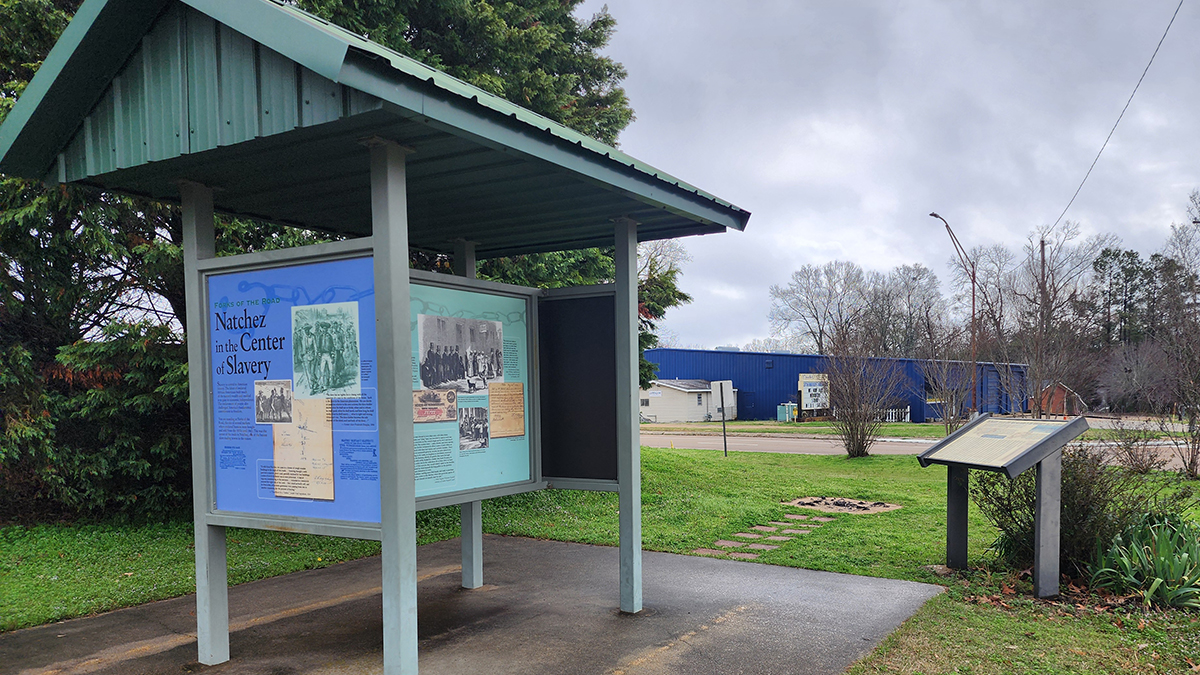
Today I added a new Place to the website: The Forks of the Road in Natchez, Mississippi.
I have also added a recent article to the What’s Happening section of the website, “I Was Sold at the Forks of the Road,” by Alan Huffman. It takes an in-depth look at what is now happening at the site, including the National Park Service’s efforts to give this enormously important place a much more substantial presence.
For decades, the physical presence of the Forks of the Road has seemed almost impossibly small compared with the scale of what happened there.
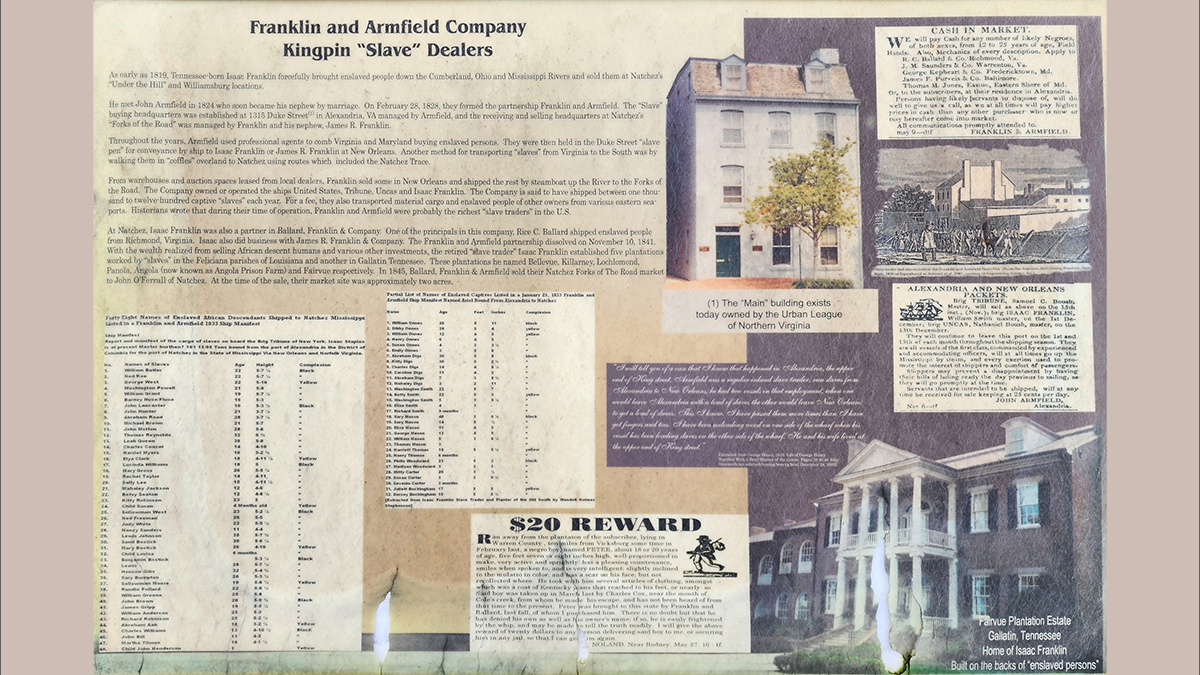
Beginning in the 1830s, the Forks became one of the largest centers of the domestic slave trade in the United States. Hundreds of thousands of enslaved men, women, and children passed through the trading district at Natchez. Yet for generations, someone could drive through the intersection without realizing the significance of the ground beneath them.
That is finally beginning to change.
This summer, the National Park Service (NPS) unveiled new interpretive markers at the site. More is planned. The former church on the property, now called Freedom Hall, is expected to house additional exhibits, and the NPS hopes to eventually to create a museum while continuing to acquire property from willing sellers within the authorized historic area. The larger effort has also involved the National Park Foundation, the Trust for Public Land, the Archaeological Conservancy, the City of Natchez, and others.
And it is important to recognize that this moment did not happen overnight. Local activist Ser Seshsh Ab Heter-C.M. Boxley spent decades pushing for the Forks of the Road to be recognized and interpreted more fully, long before the site received the federal attention it has today.
I am genuinely happy to see this happening. When I visited the site last year, I had mixed emotions about what I saw. While I was grateful for what was there, it was disheartening to see people pull to the side of the road, look at it from their car, and then drive off. These new additions that are being planned will hopefully encourage people to leave their vehicles and engage more deeply with a place that carries such powerful stories and lessons.
Historic preservation is not only about saving beautiful buildings, or places where battles occurred or where famous people once stood. Sometimes the places we most need to preserve are ones that force us to address difficult topics. They ask us to confront people whose lives were controlled by others, families torn apart for profit, men, women, and children forced to live and work under brutal conditions, and the deep and lasting trauma inflicted by a system that treated human beings as property.
Considering the national importance of the Forks of the Road, giving visitors a place where they can truly understand what happened there is long overdue.
And I am very glad to see that work finally moving forward.

TCWP Places is Officially Launched!
As you can tell, the TCWP website is still very much a work in progress. Since 2011, I've had a vision in my head of what I wanted this website to become. It took fifteen years to get here, but I've finally found a platform, Webflow, that makes it possible. It gives me the tools to build the "interactive museum" I've been imagining for a long time.
It's going to take many months before the site starts filling out with content, but today I can finally announce an important new section: Places.
Right now, Places has a single entry: the Lincoln Home National Historic Site in Springfield, Illinois.
That may not sound like much, but behind the scenes I have more than 300 folders on an external hard drive filled with photographs, research notes, and write-ups from historical sites I've visited over the years. Places is where I'll be sharing those experiences and stories, one location at a time.
Why am I doing this?
Because I've seen firsthand how much many historical sites are struggling.
Since the pandemic, countless museums, historic homes, and preservation organizations have faced declining attendance, shrinking budgets, and difficult decisions. There are hundreds of battlefields, cemeteries, monuments, museums, and historic homes and buildings that most people don't even know exist.
I'd like to help change that.
My goal is to make it easier for people to discover what's out there and, hopefully, inspire them to visit these places for themselves. There is something special about standing where history happened, and I want to help more people experience that firsthand. For those who can't make the trip, I hope the stories, photographs, and occasional videos I share can bring these places to life.
No organization is paying for this. Most of the sites I write about won't even know I'm doing it. This is simply a personal project driven by my love of Civil War history and my desire to share the places I've been fortunate enough to visit, along with the places I'll explore in the future.
In my own small way, I want to help support the people who work so hard to preserve these sites and keep their stories alive. Places is my attempt to contribute to that effort and to encourage others to visit, learn, and help ensure that these pieces of our history don't fade away.
If there's a historical site you'd like to see included, or if you represent a museum, nonprofit, battlefield, historic home, or preservation organization and want to make sure your location is on my radar, please feel free to send me an email.
- Carrie

.svg)


